A pricing tracker built for quick-commerce brands.
Turning raw scraper data into a single view of pricing across every platform, so brands can catch MOP breaches before they cost margin.

The Problem
It's genuinely hard for a brand to track its own pricing efficiently across platforms. The same SKU sells on Zepto, Blinkit, Instamart, BigBasket, Amazon, and Flipkart Minutes, across dozens of cities and dark stores, and prices shift constantly as platforms discount to match each other, sometimes dipping below the brand's Minimum Operating Price (MOP) without permission. Brands needed clear answers: who cut the price first, who followed, and whether it counted as an MOP breach.
- No visibility into how a price actually showed up across platforms, cities, and dark stores
- Platforms discounted below MOP with no one noticing for days
- Disputes with platform POCs based on a hunch, not proof
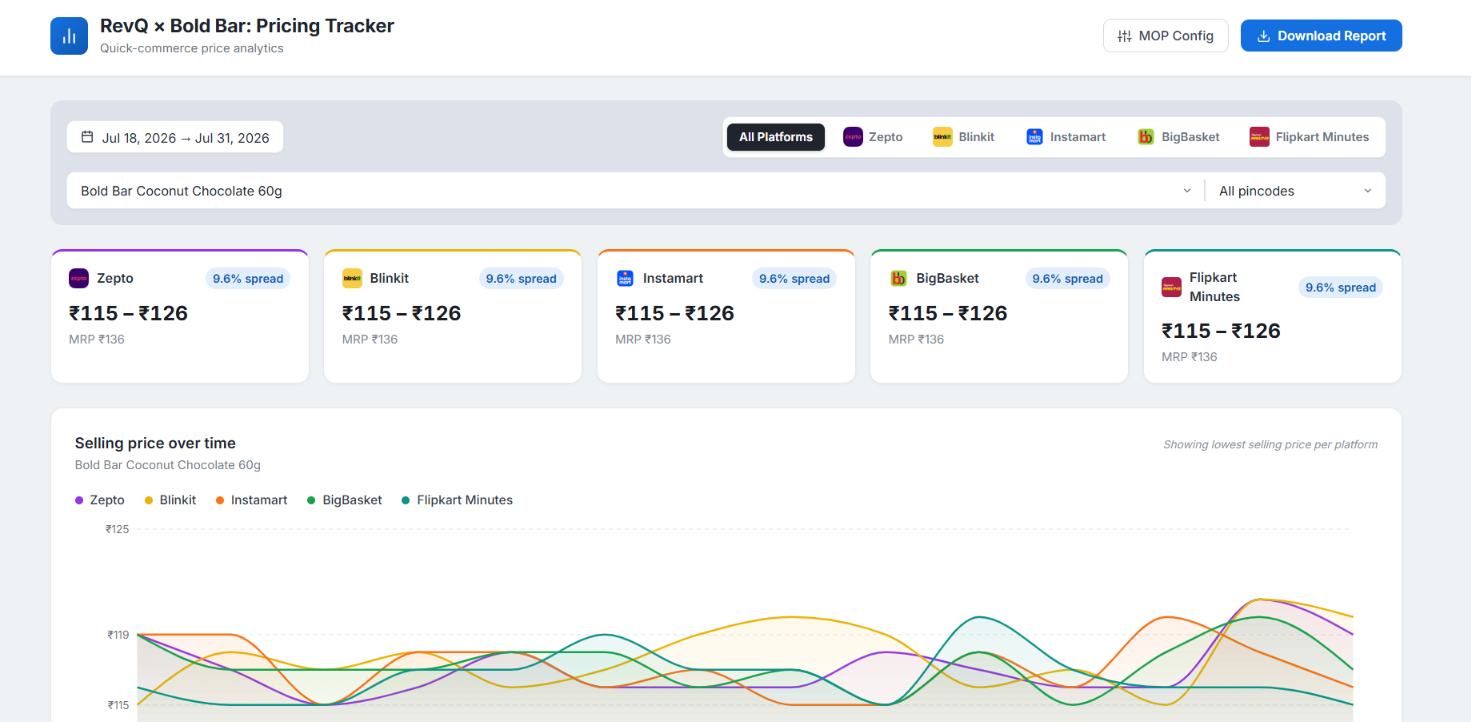
- One dashboard for real-time pricing across every platform, city, and dark store
- Automatic MOP breach detection, with the option to pull pricing data at different time slots through the day
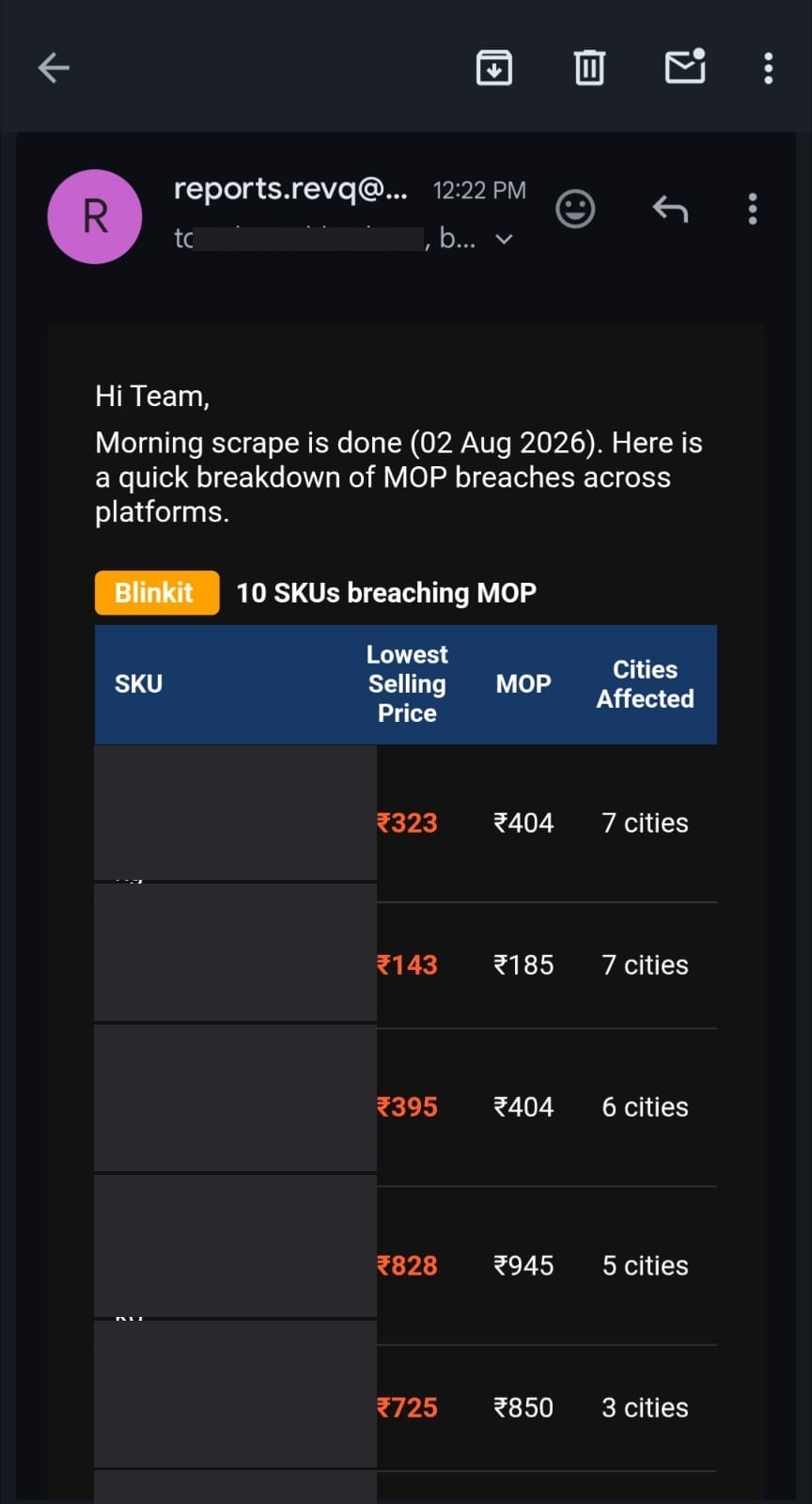
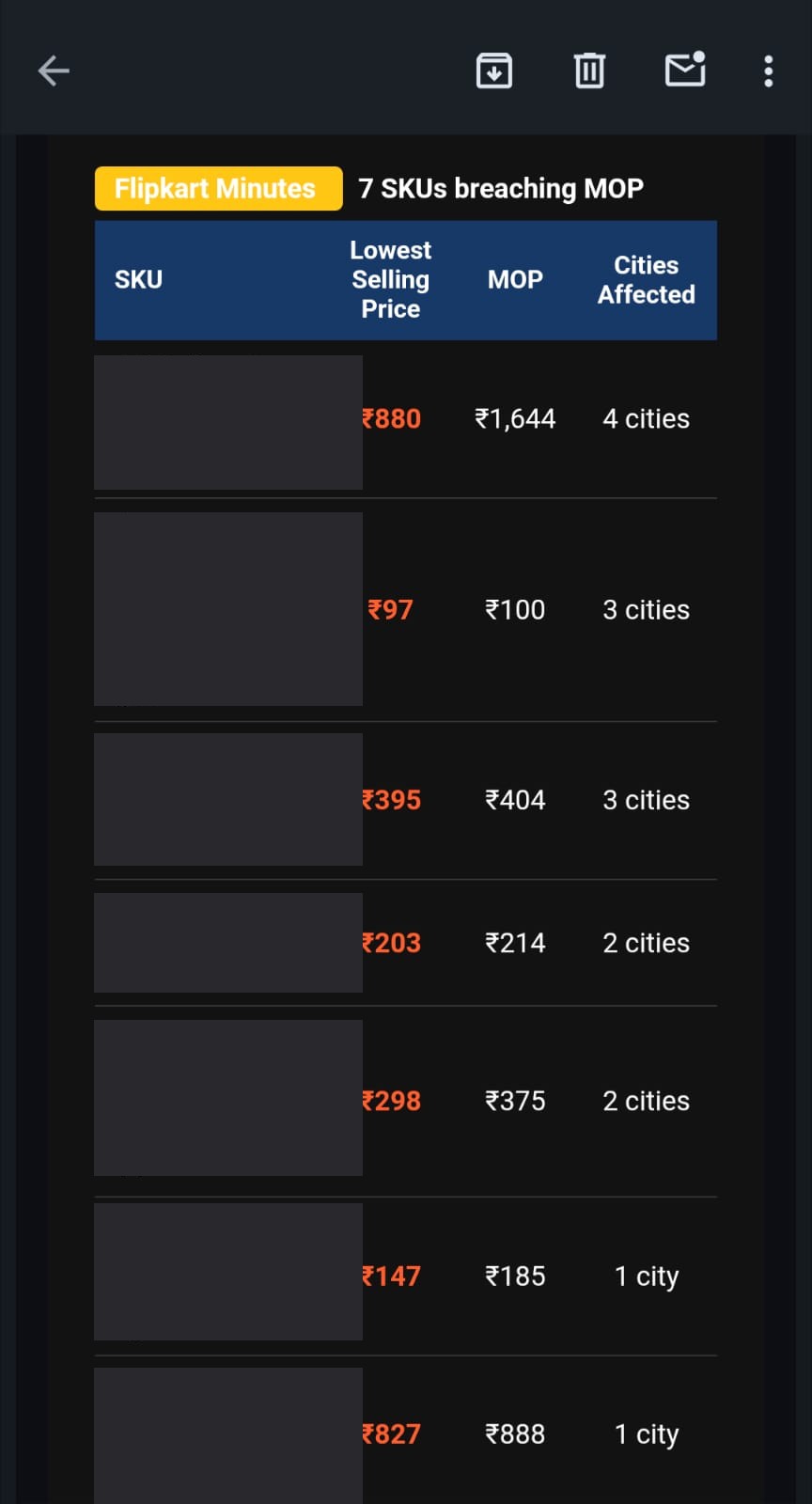
- The team now has concrete proof, downloadable reports and quick email alerts, instead of a hunch
How It Works
The backend team owned the scrapers. Everything from raw data to finished product was mine to figure out.
Key Decisions
The backend gave me rows of scraped prices. Turning that into a product people would actually trust and use meant making decisions the data alone couldn't answer.
Spread % on every card
- Raw price lists made clients do their own math to see how wide a pricing gap was across platforms.
- Added a spread % badge so the gap is the first thing a client sees, not something they have to calculate.
MOP breach threshold
- The backend just returned prices; deciding when a price actually counts as a breach was a product call, not a data one.
- Set the line at 1% below MOP, tight enough to catch real violations, loose enough to ignore rounding noise.
Price trend, not a snapshot
- Brands kept asking whether a low price was a one-off or a sustained problem.
- Added a selling-price-over-time chart so a client can tell a blip from a pattern at a glance.
MOP Alerts
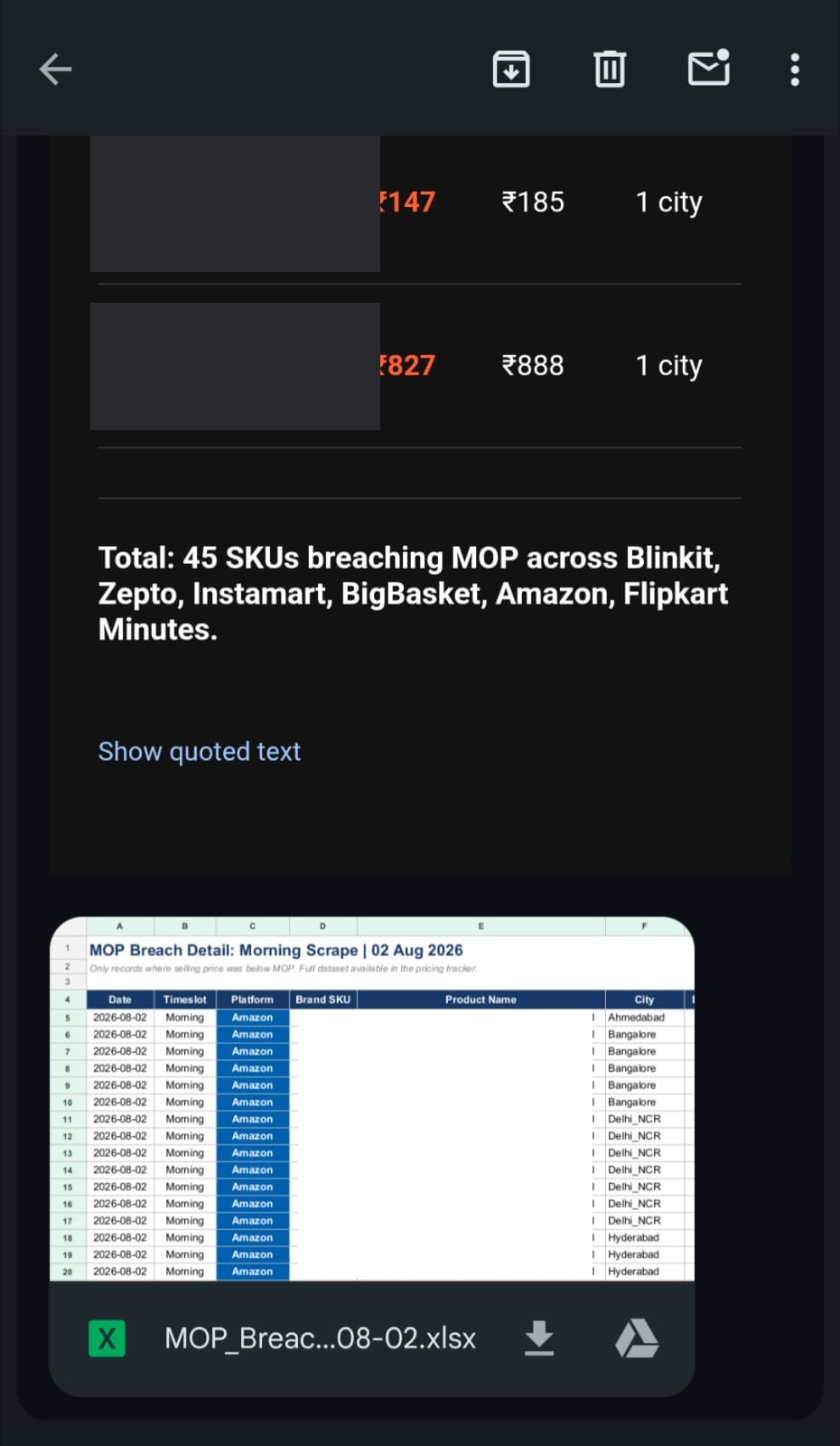
Daily breach alerts land in the client's inbox automatically, at different time slots through the day, each with a downloadable report ready to share with platform POCs. Brand and SKU names below are boxed out for confidentiality.
Challenges & Tradeoffs
The challenge: scrapers aren't perfectly reliable
Some days, a scraper would fail to run for a platform, or simply not fire at all. The dangerous failure mode is treating "no data" the same as "no breach": a client could believe they're clean when a slot was simply never captured.
How I handled it: made missing data its own state
Instead of silently defaulting a missing scrape into a false "no breach," I flagged it as its own explicit state in the dashboard and reports, so clients could tell the difference between "verified clean" and "we don't have data for this slot yet."
Outcome
The tracker was first built for a leading ₹100+ crore D2C organic food brand, whose quick-commerce team used it to report and resolve pricing issues directly with platform POCs, backed by concrete proof instead of a hunch. It's since been replicated for other RevQ client brands to help with the same pricing concerns.
- Deep-dive into exactly which platform cut price first, and who followed, instead of just spotting that something changed
- Faster resolution with platform POCs: a dated, city-level report turns "we think you're underpricing us" into an undeniable paper trail
- A shift from reactive to proactive: breaches are caught within hours of a scrape instead of being noticed weeks later in a margin review